

Our Next Seminar will be held on Tuesday 24th November 2026, 5-7pm.
This will be a free virtual event via Zoom. Spaces are limited on a first come basis.
To book your space please visit our Ticket Tailor page here.
Presenters: Howard Ryland, Daniel Whiting, Suzannah Kinsella.

Dr. Howard Ryland

Dr. Daniel Whiting
Suzannah Kinsella
Dr. Howard Ryland
Dr. Howard Ryland is a Consultant Forensic Psychiatrist with Oxford Health NHS Foundation Trust and a Senior Clinical Research Fellow with the Department of Psychiatry at the University of Oxford. Dr. Ryland completed his DPhil in 2021 during which he developed a new outcome measure for forensic mental health services called the FORensic oUtcome Measure (FORUM) (www.forensicoutcomemeasure.com).
Dr Ryland has been a research fellow at the UK Parliament and is a guideline development committee member at the National Institute for Health and Care Excellence. He holds a National Institute for Health and Care Research Senior Clinical and Practitioner Research Award and is the Specialist Advisor on Outcome Measure in Mental Health Services at the Royal College of Psychiatrists.
He has worked with NHS England to identify and fund research priorities related to commissioning secure mental health services. He currently co-leads a James Lind Alliance Priority Setting Partnership to identify the top ten most important research questions for forensic mental health services in England, Scotland and Wales.
Dr. Daniel Whiting
Dr Daniel Whiting is a clinical academic forensic psychiatrist. He is a Clinical Associate Professor in forensic psychiatry at the University of Nottingham, where he co-chairs the Forensic Research Nottingham group, and an honorary consultant forensic psychiatrist with Nottinghamshire Healthcare NHS Foundation Trust.
He undertook his PhD as part of a NIHR Doctoral Research Fellowship based with the Forensic Psychiatry Research Group at the University of Oxford. Doctoral work involved developing approaches to improve violence risk assessment and intervention in first episode psychosis. He subsequently joined the University of Nottingham in 2022 as a Clinical Associate Professor, with clinical roles in prison mental health services and currently community forensic services.
He has recently been co-leading a project funded by the NIHR Policy Research Programme examining collaborative risk assessment across the secure pathway, and a national priority setting partnership for forensic mental health research with the James Lind Alliance.
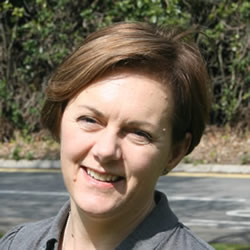
Suzannah Kinsella
Suzannah Kinsella is the James Lind Alliance Adviser for this Adult Secure Inpatient and Community Forensic Mental Health Services Priority Setting Partnership. Her role is to the chair the steering group meetings and provide guidance on the priority setting process. Suzannah is a social researcher by background, specialising in public dialogue.
She joined the JLA as an adviser in April 2019. Other PSPs she is currently advising include children who are care experienced, women and cardiovascular disease and gender dysphoria & incongruence.
Her previous PSPs have included stroke, community nursing, burn injury and childhood neurological conditions.
Forensic mental health services cost around 20% of the national mental health budget in England, Scotland and Wales. The consequences of poor care are serious, including reoffending, early rehospitalisation, physical co-morbidities, and premature mortality. Despite this, there is no agreement on the most important research questions.
This project applies the established James Lind Alliance (JLA) Priority Setting Partnership (PSP) methodology to identifying the top ten research priorities in forensic mental health services nationally. This approach, endorsed by the National Institute for Health and Care Research, involves gathering key stakeholders to identify and agree the most important unanswered research questions in a field.
A steering group chaired by an expert JLA advisor, led by Dr Ryland and Dr Whiting, and including patients, carers, clinicians and academics, oversees the project. A survey was circulated to all relevant individuals and organisations, asking them to submit questions they view as important for research to answer. This received 303 responses from individuals, including 100 from patients, with over 900 suggestions for research topics. These topics were catalogued, analysed and summarised into around 50 questions which are about to be launched in a second survey, to ask people for their ranking of these topics, before final prioritisation workshops.
In this webinar we will:
- Describe the process and methodology.
- Outline findings so far and the questions being taken into the second survey.
- Invite discussion on the topics in the current question longlist.
- Discuss the potential uses of the final priority list in 2027 including as a springboard for collaborative research proposals.
For more information please visit: https://www.jla.nihr.ac.uk/priority-setting-partnerships/adult-secure-inpatient-and-community-forensic-mental-health-services.