
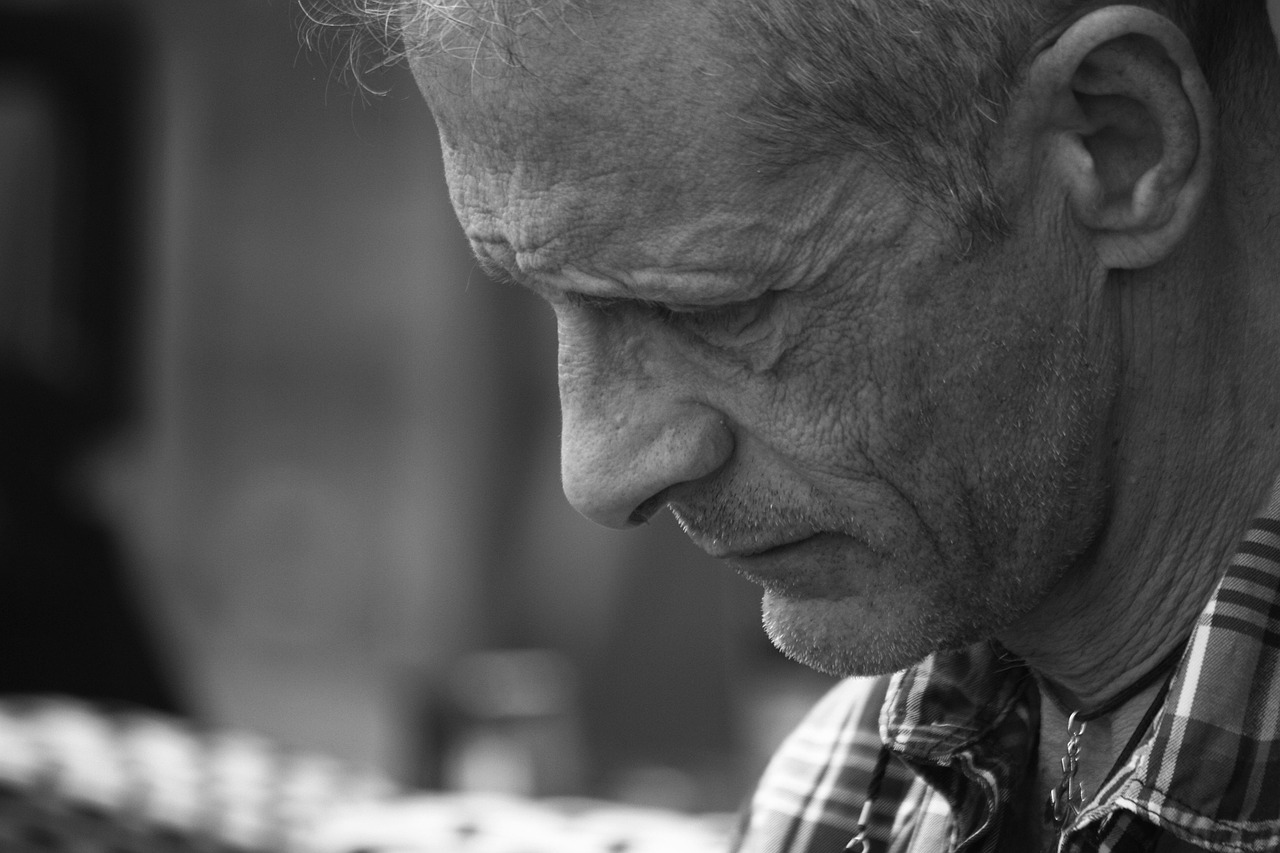
by Professor John Gunn & Professor Pamela Taylor – Co-Chairs, Crime in Mind.
This article appears in our latest newsletter (summer 2025) which can be downloaded here.
About 40% of people in the UK are aged 50 years or more, the threshold for being regarded as ‘old’ in the criminal justice system. Nearly one in five is over 65. It is, therefore, hardly surprising that numbers and proportions of older offenders – and of older victims of crime are rising – but actual figures are elusive. Statistics seem rather to focus on service use; although remaining very much in the minority in prisons, it is nevertheless plain that the only growth age groups in prisons are of those aged 50 or over 1.
This newsletter highlights research and thinking around some of the special needs of older people in forensic psychiatry and the criminal justice system. This is welcome, but we start with words of caution – first that the matters raised do not imply an elderly crime wave and, secondly, that many, probably many more older people will have become victims of crime rather than perpetrating it. It has repeatedly been shown that fear of crime is highest among older people, although actual victimisation seems to remain much lower than among young people 2 . That said, older people may be disproportionately likely to suffer from particular types of crime or less likely to get relevant help. We may need more research here – to inform prevention of such victimisation where possible, and resolution of harms where not.
In prisons or specialist hospitals older offenders still form a minority group, and it always seems difficult to provide for minority groups. One of this Newsletter authors – Brid Dineen – draws out a further key dilemma here, from the Tomlin group’s paper: the absence of consensus around what defines ‘older adult’ within forensic settings.
We suggest that this is less important than the question ‘what needs may some older people have that cannot be met without some reform of prison or specialist services?’ Thoughts about vulnerabilities are important, but so they are for all patients; thoughts about cognitive impairments are vital, but so they are for all patients – many, if not most people using forensic mental health services need specific help with cognitive problems; thoughts about physical disabilities are important, but few using forensic mental health services or prisons are in good physical health. Strangely, three things that we think are very important are not picked up strongly: ‘super-risk’ to others, loneliness/isolation and end of life care.
Tom Dening and Jen Yates focus on knowledge about care needs for older people in specialist forensic mental health services, drawing on the consensus work of Jack Tomlin and colleagues, an international group with experience in Belgium, Germany and the UK. This is a welcome, comprehensive perspective on some of the special healthcare needs, although omitting reference to a key skill generally more applicable to older patients and one that most secure unit staff feel wholly unprepared for – end-of-life care. A paper by Adam and Jonathan Hurlow and others 3 is useful here.
Among the papers that Anna Sri and Paula Murphy commissioned, perhaps we most miss evidence on the risks, criminogenic needs and responsivity of older prisoners and patients. Perhaps this is where we most need new research in this area? As with any other age group, older offenders and offender-patients will have committed, collectively, a very wide range of acts judged as offending. Public order offences have become newsworthy; some commit more truly antisocial acts such as theft, but some are in the system for very serious crimes indeed.
A study in Broadmoor hospital, completed in 2004, showed that median length of stay of the 16 patients of 60 years or over then resident was 17 years, with a range of 1-57 years 4 , nearly three times the median of their younger peers. Perhaps at least some older people are among the most dangerous in the country? From our own experience, a very sweet looking old lady in her 70s in a high security setting, while lacking capacity to scale fences or walls, had lost none of her will to dispose of others and had explicit and achievable plans for poisoning fellow patients. A frail 80 year-old man in a wheelchair similarly seemed ill-placed in high security, until viewing the walls of his room, covered with sexually explicit pictures of women almost obliterated by his attacks, mostly with a rather blunt pencil, but still the intent to harm seemed high.
As more people are given ever longer sentences for their crimes, the growing incarcerated group of older offenders will pose a very special challenge. Some, however, are entering the system late after a lifetime of serious offending, for example those with a record of non-recent sex offences against children. Specialist forensic mental health input will clearly be as important as that from older age psychiatry specialists.
Prisoners and forensic mental health patients have rarely had active and successful social lives. Episodes of imprisonment or hospitalisation commonly disrupt social networks at any age, but older peoples’ networks may be particularly fragile. Particular reluctance to leave the society of a well-run hospital unit may follow. Further, for longer stay patients, the wider community is very different from the one they left. Exploration of optimal programmes for community reintegration may be one of the most important areas for development here – underscoring probably the most important point raised by Marco Picchioni in his article about recognising ‘old age forensic psychiatry’ as a specialist field. His other points, however, seem, in effect, calling for quantitatively rather than qualitatively different services.
Finally, Artemis Igoumenous tries to introduce us to what forensic psychiatrists really look for in this field. While the answer seems reassuring – that they want access to specialist assessment, advice and support, and certainly not to ship such patients elsewhere – one outcome of this research was also troubling. Just 12% of North London forensic psychiatrists completed the survey. Artemis does not translate the percentage into actual figures, but we doubt if they even reach double figures. It is so hard to respond to every request that might lead to service improvements, but information from active clinicians is essential if developments are actually going to be helpful.
So, Anna and Paula have introduced us to another important field where too little is known, and we will certainly think about how we might support research in this field.
In the meantime, we are excited by two Crime in Mind supported development projects that are well underway. Howard Ryland (Oxford University) and Danny Whiting (Nottingham University) have successfully embarked on a research priority setting partnership exercise for adult secure mental health services with the James Lind Alliance (JLA) 5 . The range of engagement and quality of meetings and survey tool development, steered by the JLA, is impressive; we shall suggest adding specific work with older offender-patients for consideration. At the other extreme, Heidi Hales, Annie Bartlett, Fleur Souverein and Enys Delmage are developing a website to support their Group of International Researchers in Adolescent Forensics (GIRAF) – with the exciting prospect of facilitating studies of the rather different ways young offenders and offender-patients are managed and treated worldwide – almost a natural experiment as the young people and their problems are rather similar but the legal and practice framework for intervening very different.
Finally, we want to draw attention to two imminent new activities. We are about to announce new seed corn funding – small monies, but past project bear witness to how much can be achieved 6,7 .
We are also going to start some work around research ethics approval. Many researchers in
psychiatry/psychology generally are encountering damaging delays and barriers, but they are
perhaps particularly acute for forensic mental health research. Far from offering protections, it
has been suggested that lengthy processes are now putting research for some of those people who most need it in serious jeopardy. We will be putting out a call through the members’ website to hear about your experiences. Of course, we most want models of good practice – in a form we can share – but we want to hear about problems too and to think with you about solutions.
So, there are busy times ahead – enjoy this newsletter – and if you feel inclined to contribute to future issues and/or have particular topics you would like to see covered in our webinars or in the newsletter, do get in touch.
John Gunn & Pamela Taylor – Co- chairing Crime in Mind
References
- 1. https://committees.parliament.uk/publications/2149/documents/19996/default/
- 2. https://hmicfrs.justiceinspectorates.gov.uk/our-work/article/criminal-justice-joint-inspection/crimes-against-older-people-inspection/
- 3. Hurlow A, Hurlow J, Neil W and Pullinger A. (2021) Advance care planning ahead of life-altering clinical deterioration in secure settings: Do not wait until a crisis. Criminal Behaviour and Mental Health 31: 221-225. DOI: 10.1002/cbm.2203
- 4. Yorston G and Taylor PJ (2009) Older patients in an English high security hospital: a qualitative study of the experiences and attitudes of patients aged 60 and over and their care staff in Broadmoor Hospital. The Journal of Forensic Psychiatry & Psychology 20(2): 255–267 DOI:
10.1080/14789940802327259 - 5. https://www.jla.nihr.ac.uk/priority-setting-partnerships/adult-secure-inpatient-and-community-forensic-mental-health-services
- 6. Theodorou A, Sinclair H, Ali S, Sukhwal S, Bassett C and Hales H. (2024) A systematic review of literature on homicide followed by suicide and mental state of perpetrators. Criminal Behaviour and Mental Health 34 (1): 10-53. https://doi.org/10.1002/cbm.2322
- 7. Burghart M and Backhaus S. (2024) The Long-Term Consequences of Family Violence Victimization: An Umbrella Review of Longitudinal Meta
Analyses on Child Maltreatment and Intimate Partner Violence. Journal of Family Violence
https://doi.org/10.1007/s10896-024-00768-y
Research can transform lives. We want to support discoveries about what helps people with mental disorder who have been victims of criminal behaviour, or perpetrators of criminal behaviour, and their families, and the clinicians and others who treat them and, indeed, the wider community when its members are in contact with these problems. More effective prevention is the ideal, when this is not possible, we need more effective, evidenced interventions for recovery and restoration of safety.
Please help us by donating to Crime In Mind – DONATE TO CRIME IN MIND HERE
If you would like to become a Member of Crime In Mind please visit our website here.
Download your Membership Application Form Here
Membership entitles all Members to the following benefits:
- Opportunity to join the Executive committee subject to the conditions of the Articles of Association.
- Access to private members page on dedicated website containing Members discussion forums, document archive and resource libraries.
- Access to recordings of our previous webinars and seminars.
- Free attendance at suitable events awarding up to 10 CPD hours per annum